Basement Comfort Starts Here: How to Insulate a Basement
November 15, 2026
Blog
A cold, damp basement can quietly drain the comfort and efficiency out of an entire home. Because warm air rises, the uninsulated foundation below your living space often becomes the weak link in your home's thermal envelope, pulling heat downward and letting moisture creep in. That is why understanding how to insulate a basement is one of the smartest steps a homeowner can take toward a warmer, drier, and more energy efficient house.
Whether you are finishing a basement for extra living space or simply trying to tame a chilly floor above, the right approach makes all the difference. At Home Insulation Company, we have helped countless families improve their lower levels, and our home insulation services in the Wausau area are built around proven methods that stand up to Wisconsin winters. Below, we will walk through what you need to know to get the job done right.
Many homeowners assume that heating the upper floors is enough, but an unconditioned basement acts like a giant heat sink beneath your feet. Concrete foundation walls conduct cold readily, and without a thermal barrier, they pull warmth out of your living space around the clock. The result is higher energy bills, cold floors, and uneven temperatures throughout the house.
Beyond comfort, a properly insulated basement helps control condensation and humidity. When warm indoor air meets cold foundation surfaces, moisture can collect and lead to mold, musty odors, and even damage to stored belongings. Addressing both temperature and moisture at the same time is central to doing the job well, which is why insulation and air sealing go hand in hand down below.
Before any material goes up, the first step in learning how to insulate a basement is a careful inspection. You want to identify the source of any existing moisture, check for cracks in the foundation, and make sure the space is dry and sound. Insulating over a persistent water problem only traps dampness against your walls and invites bigger issues later.
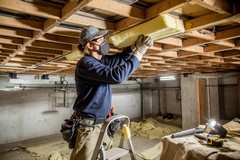
Once the space is dry, attention usually turns to the rim joist, the band of framing that sits on top of the foundation wall. This area is notorious for air leaks and heat loss, yet it is often overlooked. Sealing and insulating the rim joist delivers an outsized return because it closes off one of the largest paths for cold outdoor air to sneak into the home.
Not every insulation product performs the same way in a below grade environment, where moisture resistance is just as important as thermal value. The best choice depends on your goals, your budget, and whether you plan to finish the space.
Spray foam is a popular option for basement walls and rim joists because it insulates and air seals in a single application while resisting moisture. Rigid foam board is another strong performer, often applied directly to foundation walls to create a continuous thermal barrier. For finished basements with framed walls, cellulose or fiberglass can fill the cavities, though these are typically paired with a foam or air sealing layer to guard against dampness. If you are weighing materials for other parts of the home as well, our team can explain how options like wall insulation compare for different applications.
Here are the main factors worth considering as you choose:
One common question is whether to insulate the basement walls or the ceiling between the basement and the first floor. The answer depends on how the space is used. If you want the basement itself to be comfortable and part of your conditioned living area, insulating the foundation walls is the way to go. This keeps the entire space warmer and sets the stage for finishing it later.
On the other hand, if the basement will remain unheated and you simply want to keep the floors above warmer, insulating the ceiling can make sense. Keep in mind that this approach leaves the basement itself cold, which can affect any plumbing running through the space. For most homeowners who want year round comfort and better efficiency, insulating the walls is the preferred route, and it is the strategy we recommend most often for homes in Wausau and the surrounding areas.
Insulation alone will not deliver its full value if air is still leaking in around windows, utility penetrations, and the rim joist. Air sealing is the step that ties everything together, blocking drafts that carry both cold air and moisture into the space. A thorough basement project treats sealing and insulating as one connected effort rather than separate tasks.
Managing moisture is equally important. Directing water away from the foundation, ensuring proper grading outside, and addressing any humidity sources inside all help your insulation perform as designed. When these details are handled correctly, you get a basement that stays dry and comfortable season after season.
If your basement already has insulation but still feels cold, drafty, or damp, the existing material may be the culprit. Insulation that has absorbed moisture, settled, or been damaged by pests loses much of its effectiveness and can even contribute to indoor air quality problems. In these cases, removing the old material before installing new insulation is the right move.
Our team handles professional insulation removal in Wausau, clearing out compromised material safely so your new insulation can perform at its best. Starting with a clean, dry foundation gives your basement the strongest possible foundation for lasting comfort and efficiency.
Learning how to insulate a basement comes down to a few key principles: start with a dry, sound space, seal air leaks at the rim joist and penetrations, choose moisture resistant materials suited to below grade conditions, and decide whether the walls or ceiling best fit how you use the room. Handle those steps well and you will notice warmer floors, steadier temperatures, and lower energy bills throughout the year.
Every home is a little different, and the ideal plan for your basement depends on its condition, your goals, and your budget. Serving Wausau and nearby communities, our experienced crew is glad to walk your space, explain your options, and recommend an approach that fits. If you are ready to make your lower level more comfortable, reach out to Home Insulation Company for a free estimate and let us help you turn a cold, forgotten basement into one of the most comfortable rooms in your home.
November 15, 2026

November 3, 2026
November 1, 2026
October 17, 2026